Deepening course in covert surveillance for professionals

This course is designed to develop and provide formal recognition of learners’ knowledge, understanding and competence of surveillance techniques. Surveillance is the monitoring of the behaviour, activities, other changing information, usually of people for the purpose of intelligence gathering as part of an investigation into unlawful or illegal activity, or for enforcement activities.
The course provides learners with a progression from the smaller Intermediate Award by expanding further on their knowledge and skills and prepares them to progress to the larger Certificate sized surveillance sector qualification, which in turn covers additional aspects of covert surveillance. This certificate is aimed at those who wish to gain a recognised qualification, whether they are new to the investigative or enforcement sectors or they have a professional background in a related field and intend to engage in continuing professional development. The skills developed will be relevant to the private investigation sector and to individuals with a military background carrying out resettlement training prior to civilian life.
All learners will cover the mandatory topics including the principles of types of surveillance, log keeping, third party awareness, radio communication, managing dynamic changes,planning, and debriefing, legal issues, organising foot and mobile surveillance, advanced foot and mobile surveillance, public transport surveillance and organising countersurveillance operations
- - Legal basis for carrying out surveillance.
- - Risk management
- - Personality of the surveillance operative
- - Surveillance methods
- - Documentation means.
- - Camera. Description and use.
- - Video camera. Covert types. How to use.
- - Make-up and disguise.
- - Documentation methods. Static method. Mobile method.
- - Snapshot method.
- - Learning documentation methods
- - Covert communication mode. Applications used. Communication radios. SIM card stations
- - Preparing an action.
- - The surveillance operative's bag
- - Investigations prior to action.
- - Study of the terrain where target surveillance will be acquired.
- - Preparing the action plan. Establishing positions.
- - Conducting the action briefing.
- - Special notions concerning the organisation of a surveillance operation.
- - Setting up the surveillance action
- - Acquiring target surveillance. Acquisition methods.
- - Acquisition by description - talking portrait.
- - Acquiring the target by photo
- - Acquiring the target by direct hand-over
- - Foot surveillance, methods according to the environment applied.
- - Car surveillance in urban actions
- - Car surveillance in rural actions
- - Car surveillance on motorways
- - Carrying out surveillance by public transport
- - Carrying out bus surveillance
- - Carrying out surveillance by train
- - Carrying out surveillance by metro
- - Rural surveillance
- - Operatives’ exposure
- - Conducting countersurveillance and target verification
- - Team leader's logbook
- - Final report. Required documents. Preparation. Requirements.
- - How to manage the surveillance actions.
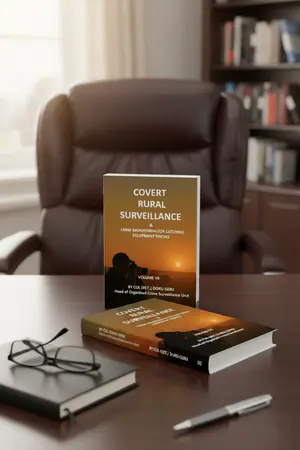
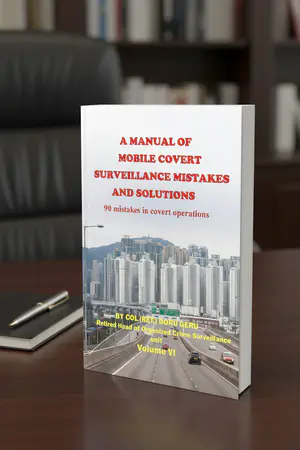
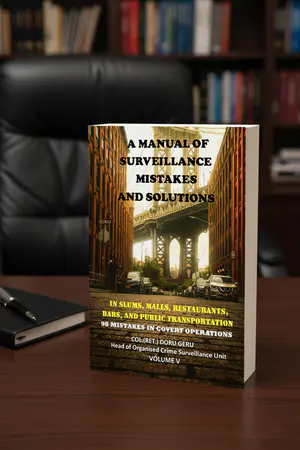
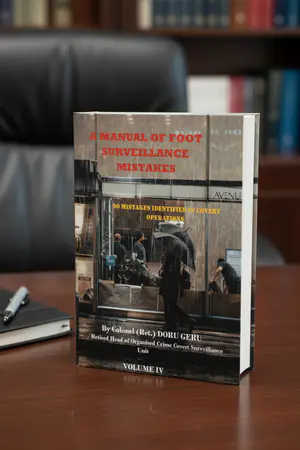
The Geru Method - BOOKS
GERU SURVEILLANCE ACADEMY LTD offers a series of covert surveillance books at various levels of complexity. They provide valuable knowledge and insights into the field of covert surveillance.